Sunday, August 2, 2020

Solar System Summer


If you've been outside the last few nights, with clear skies, you've probably been as struck as I have with the tight arrangement of the Moon, Jupiter and Saturn.  Last night was as close as they'll get for a while and I was lucky to get some wide angle shots before zooming in on Jupiter and Saturn.  

Photo Details - Jupiter and Saturn
August 1, 2020
Orion 8" Astrograph on VX Mount
NexImage10 Camera
Image Acquisition iCap2.4
Y800 Codec
Image Stacking in AutoStakkert
Wavelet Filtering in Registax
Final Adjustments in Photoshop

Sunday, July 26, 2020

New Sunspot


It was a quiet day for solar prominences, but a new sunspot showed up.  This was my first attempt to photograph sunspot in hydrogen-alpha.  The seeing wasn't great because, well, it's July in Alabama.  In any case, this one was pretty interesting to look at through the eyepiece as there's a lot of activity around the spot.  Though the spot itself appears small relative to the rest of the sun, it's about 71% of the size of Earth.  

Photo Details
July 26, 2020
Coronado PST Telescope
NexImage10 Camera
Image Acquisition iCap2.4
Y800 Codec
Image Stacking in AutoStakkert
Wavelet Filtering in Registax
Final Adjustments in Photoshop

Sunday, July 19, 2020

Comet Neowise


We had a beautiful evening to find and photograph Comet Neowise.  This comet was first discovered on March 27, 2020 by an asteroid-hunting telescope currently orbiting the Earth.  It's currently traveling about 144,000 mph which is about twice as fast as the Earth's velocity around the Sun and we won't see it around here for another 6800 years.  

Photo Details
July 29, 2020
Nikon D3100 Camera
13 subframes at 10 seconds/frame
Total Exposure Time = 2 minutes, 10 seconds
Image Stacking in Deep Sky Tracker
Final Image Processing in PhotoShop

Tuesday, June 2, 2020

More Solar Prominences

Second attempt at solar imaging.  A lot more activity was evident.  I still need on getting good focus, but it could have a lot to do with poor seeing conditions as our temperatures and humidity are really ramping up.

Photo Details
May 31, 2020
Coronado PST Telescope
NexImage10 Camera
Image Acquisition iCap2.4
Y800 Codec
Image Stacking in AutoStakkert
Wavelet Filtering in Registax
Final Adjustments in Photoshop

Sunday, May 17, 2020

Messier 87


Spring is the time for galaxies in the constellation Virgo.  Last night, I targeted Messier 87 for the first time.  The conditions weren't great, but M87 is very large and bright which made up for the marginal seeing conditions.  This galaxy is the most massive one we know of, with estimates of 2,700 thousand million Suns within it.  It's also famous for its central jet (not seen in the photos above) which extends out 65,000 light years and emits synchrotron radiation (light accelerating perpendicular to its velocity).  At its center is a supermassive black hole which famously became the first black hole ever imaged by the Event Horizon Telescope in April 2019, an astounding feat for humanity.  Aside from the astounding attributes of M87, it is surrounded by many other much fainter galaxies.  Can you spot them all in the top photo?  I circled the ones I could see in the lower photo.

Photo Details
April 24 and 30, 2020
Orion 8" Astrograph on VX Mount
SBIG STF-8300C Camera
Baader MPC Mark III Multi-Purpose Coma Corrector
Skyglow filter
58 subframes at 3 minutes/frame
Total Exposure Time = 2 hours 54 minutes
Image Acquisition in CCDOps
Image Stacking in Deep Sky Tracker
Image Processing in PhotoShop

Friday, May 8, 2020

Messier 99


Messier 99 is a classified as a grand spiral galaxy, but has the unusual feature of one dominant arm.  This galaxy spans about 83,000 light years across and contains a little less mass than our own galaxy weighing in at only 100 thousand million solar masses.  Such a lightweight!  M99 is also part of the Virgo cluster of galaxies which becomes visible each spring.  A notable feature of the Virgo cluster is they're all about 65 million light years away.  In other words, if you were on a planet in M99 looking at Earth with a very powerful telescope right now, you would see dinosaurs walking the Earth.

Photo Details
April 24 and 30, 2020
Orion 8" Astrograph on VX Mount
SBIG STF-8300C Camera
Baader MPC Mark III Multi-Purpose Coma Corrector
Skyglow filter
58 subframes at 3 minutes/frame
Total Exposure Time = 2 hours 54 minutes
Image Acquisition in CCDOps
Image Stacking in Deep Sky Tracker
Image Processing in PhotoShop

Monday, May 4, 2020

Lunar Craters

Mare Imbrium with Archimedes Crater in Center.

String of craters near Mare Nubium

Close up of Arzachel, Alphonses & Ptolemaeus Craters

Close up of Arzachel, Alphonses & Ptolemaeus Craters

Largest to Smallest:  Archimedes, Aristillus & Autolycus.

We've had a pretty good run of cool clear nights as the moon is approaching 1st quarter.  It was a perfect time to capture some close-ups of the incredibly varied Moonscapes.  A close inspection of the shadows cast into the crater bottoms shows just how jagged the peaks can be rimming the craters.  The largest, very round and flat-bottomed crater in the bottom picture is the best example.  This crater, named after Archimedes, is about 50 miles in diameter and 1.3 miles deep.  For reference, the Grand Canyon is about 1 mile deep, on average.


Photo Details
April 30, 2020
Orion 8" Astrograph on VX Mount
NexImage10 Camera
Image Acquisition iCap2.4
Y800 Codec
Image Stacking in AutoStakkert
Wavelet Filtering in Registax
Final Adjustments in Photoshop

Saturday, May 2, 2020

Sun's Surface and Prominence


Today was my first real attempt to image the Sun's surface and a pretty large solar prominence.  A huge thank you goes out to Marty for posting a really helpful YouTube tutorial on his Wise Imaging channel.  I still have a ton to learn and practice at this form of imaging, but overall I think it was a decent first attempt.  

The prominence is made up of plasma which is a hot blend of hydrogen and helium that's electrically charged.  There's magnetic fields involved and when they become unstable they erupt outward to release the plasma.

Photo Details
May 2, 2020
Coronado PST Telescope
NexImage10 Camera
Image Acquisition iCap2.4
Y800 Codec
Image Stacking in AutoStakkert
Wavelet Filtering in Registax
Final Adjustments in Photoshop

Tuesday, April 28, 2020

Early Phase Moon


The Moon is always a great target and it's rare when I'm able to catch an early phase due to trees on my horizon.  But a couple nights ago, things lined up just right and the sky was perfectly clear.  It's going to be fascinating watching NASA go back to the moon in 2024 with crewed missions.


Photo Details
April 25, 2020
Orion 8" Astrograph on VX Mount
NexImage10 Camera
Image Acquisition iCap2.4
Y800 Codec
Image Stacking in AutoStakkert
Wavelet Filtering in Registax
Final Adjustments in Photoshop

Sunday, April 26, 2020

Venus


Over 400 years ago, Galileo Galilei made the first recorded observations of the phases of Venus as we and it orbited the sun.  These observations were critical to support the Copernican system (Sun-centered) while ruling out the older Ptolemaic system (Earth-centered).  Venus is easily visible with the naked eye as it's the brightest object in the night sky, except for the moon.  Since it orbits closer to the sun than Earth, we always see it relatively close to the sun; just after sunset or around sunrise.  Through a telescope, it's phases are clearly visible, but all we are seeing is the very thick atmosphere reflecting light.  The atmosphere, made mostly of carbon dioxide, is so thick it's the hottest planet in our solar system where temperatures can climb to 880F.  Hot enough to melt lead.  Given its extreme environment, it's a tough planet to explore.  More than 20 missions have been directed to Venus, but only a few (from the Soviet Union) have ever made a landing.  The missions were typically very short-lived (minutes to days) before the craft were crushed and melted by the very atmosphere they were sent to study.

Photo Details
April 25, 2020
Orion 8" Astrograph on VX Mount
NexImage10 Camera
Image Acquisition iCap2.4
Y800 Codec
Image Stacking in AutoStakkert
Wavelet Filtering in Registax
Final Adjustments in Photoshop

Wednesday, April 15, 2020

Messier 97 and 108


Messier 97 (Owl Nebula) and 108 (Surfboard Galaxy) are both located near the scoop of the big dipper in the northern sky.  While they appear to be of similar size, it's merely an optical trick.  The diameter of the Owl is about 3 light years while the Surfboard galaxy from end-to-end is 100,000 light years, or over 30,000 time larger.  The similar apparent size comes from their distances.  The Owl is only about 4,000 light years away and the Surfboard's light has been traveling to us over the last 46 million years.

The Owl is a planetary nebula with a triple shell structure of gas.  The two dark spots (eyes of the Owl) are caused by bipolar activity in the central shell of gas.  We are seeing the Surfboard galaxy from the side, but astronomers believe it's a spiral galaxy with some areas of young star formation.

Photo Details - Messier 97 and 108
April 13, 2020
Orion 8" Astrograph on VX Mount
SBIG STF-8300C Camera
Baader MPC Mark III Multi-Purpose Coma Corrector
Skyglow filter
19 subframes at 3 minutes/frame
Total Exposure Time = 57 minutes
Image Acquisition in CCDOps
Image Stacking in Deep Sky Tracker
Image Processing in PhotoShop

Saturday, January 25, 2020

Messier 42 - Orion Nebula Update


I was able to get out again last week to again target the Orion Nebula.  My previous image had just 1 hour 24 minutes of total exposure time.  The one above included that with a second night of imaging for a total of 2 hours 30 minutes.  The net difference was being able to bring out a lot more detail.  

Photo Details
January 21 & 24, 2020
AstroTech 65Q on VX Mount
SBIG STF-8300C Camera
Skyglow filter
50 subframes at 3 minutes/frame
Total Exposure Time = 2 hours 30 minutes
Image Acquisition in CCDOps
Image Stacking in Deep Sky Tracker
Image Processing in PhotoShop

Thursday, January 23, 2020

Messier 42 - Orion Nebula


The best winter sight, by far, is the Orion Nebula (Messier 42).  I've photographed this one a few times previously, but this was my first attempt with my wide-field telescope.  While it would have been nice to have more time on it, it turned out fairly well.  I shot 40 frames at 3 minutes per frame, but it must have been a busy night up there because 10 of the frames had airplane or satellite tracks through them and had to be discarded.  The net time was 1 hour 24 minutes.  I'd love to come back when the weather clears to try and double the total exposure.

Photo Details
January 21, 2020
AstroTech 65Q on VX Mount
SBIG STF-8300C Camera
Skyglow filter
28 subframes at 3 minutes/frame
Total Exposure Time = 1 hours 24 minutes
Image Acquisition in CCDOps
Image Stacking in Deep Sky Tracker
Image Processing in PhotoShop

Monday, January 20, 2020

Moon 2020


First astrophotos of the year were, of course, the moon!  I really need to make an effort to shoot from some different locations.  My sky availability at home basically gives me right around the first quarter to full moon which is great, but I miss out on a lot of interesting features that are only captured during earlier phases.  Until I make that effort, these will have to do!


Photo Details
January 8, 2020
AstroTech 65Q on VX Mount
NexImage10 Camera
Image Acquisition iCap2.4
Y800 Codec
Image Stacking in AutoStakkert
Wavelet Filtering in Registax
Final Adjustments in Photoshop

Wednesday, December 18, 2019

December Moon


Nothing beats a crisp moon glowing over a cold winter's night.  These were shot a few weeks ago when the moon was just past First Quarter.  

Photo Details
December 4, 2019
Orion 8" Astrograph on VX Mount
NexImage10 Camera
Image Acquisition iCap2.4
Y800 Codec
Image Stacking in AutoStakkert
Wavelet Filtering in Registax
Final Adjustments in Photoshop

Sunday, September 1, 2019

Messier 16 (War) Eagle Nebula and the Coat Hanger

Messier 16 (War) Eagle Nebula

Coat Hanger Asterism

Friday night brought clear skies and (reasonably) dry air and it was the perfect time to get out for some deep sky imaging.  The first target was Messier 16, otherwise known as the Eagle Nebula.  I added the (War) in honor of the first victory of the year for the Auburn Tigers.  I've imaged M16 a few times and this one may be the best one yet.  The "elephant trunks" in the middle were imaged by the Hubble Space Telescope and became one of the most famous images of all time and are known as the Pillars of Creation, an active star forming area.

The second image is known as the Coat Hanger asterism for obvious reasons.  I wasn't able to fit all the stars in the image; there's a few more off to the right.  Still, it's a striking collection known especially for it's shape and the sharp contrasting colors between the starts.


Photo Details - Messier 16
August 30, 2019
Orion 8" Astrograph on VX Mount
SBIG STF-8300C Camera
Baader MPC Mark III Multi-Purpose Coma Corrector
Skyglow filter
9 subframes at 3 minutes/frame
Total Exposure Time = 27 minutes
Image Acquisition in CCDOps
Image Stacking in Deep Sky Tracker
Image Processing in PhotoShop

Photo Details - Coat Hanger
August 30, 2019
Orion 8" Astrograph on VX Mount
SBIG STF-8300C Camera
Baader MPC Mark III Multi-Purpose Coma Corrector
Skyglow filter
19 subframes at 3 minutes/frame

Total Exposure Time = 57 minutes
Image Acquisition in CCDOps
Image Stacking in Deep Sky Tracker
Image Processing in PhotoShop

Saturday, July 27, 2019

Jupiter & Saturn


A week of beautiful weather encouraged me to get back out and image some planets.  Saturn is busy chasing Jupiter across the sky at sundown and neither disappointed on the two clear nights we had this week.  You might notice the small spheres at about 7 o'clock on Jupiter.  That's the moon Ganymede just finishing it's transit of the surface.  

Photo Details - Jupiter
July 24, 2019
Orion 8" Astrograph on VX Mount
NexImage10 Camera
Image Acquisition iCap2.4
Y800 Codec
Image Stacking in AutoStakkert
Wavelet Filtering in Registax
Final Adjustments in Photoshop

Photo Details - Saturn
July 26, 2019
Orion 8" Astrograph on VX Mount
NexImage10 Camera
Image Acquisition iCap2.4

Y800 Codec
Image Stacking in AutoStakkert
Wavelet Filtering in Registax
Final Adjustments in Photoshop

Saturday, July 13, 2019

Weather & Nightscapes


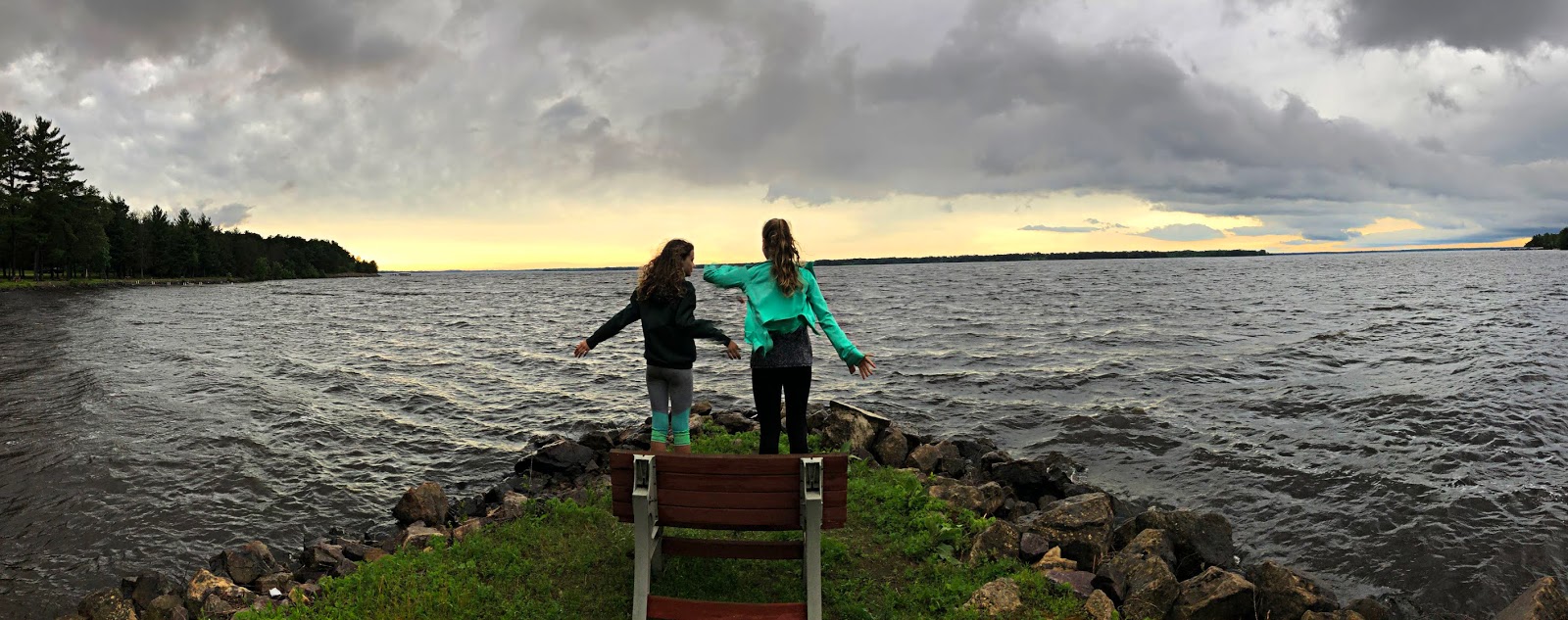
And so begins my new interest in photographing weather and nightscapes.  We had a week of gorgeous skies in Wisconsin at Castle Rock Lake followed by a beautiful night here in the south.  This kind of photography poses its own unique challenges, but sure is fun!   

Photo Details
First 8 photos above taken at Castle Rock Lake with and iPhone.
Postprocessing in Photoshop

Bottom Photo
Nikon D3100
Postprocessing in Photoshop