Monday, January 20, 2020

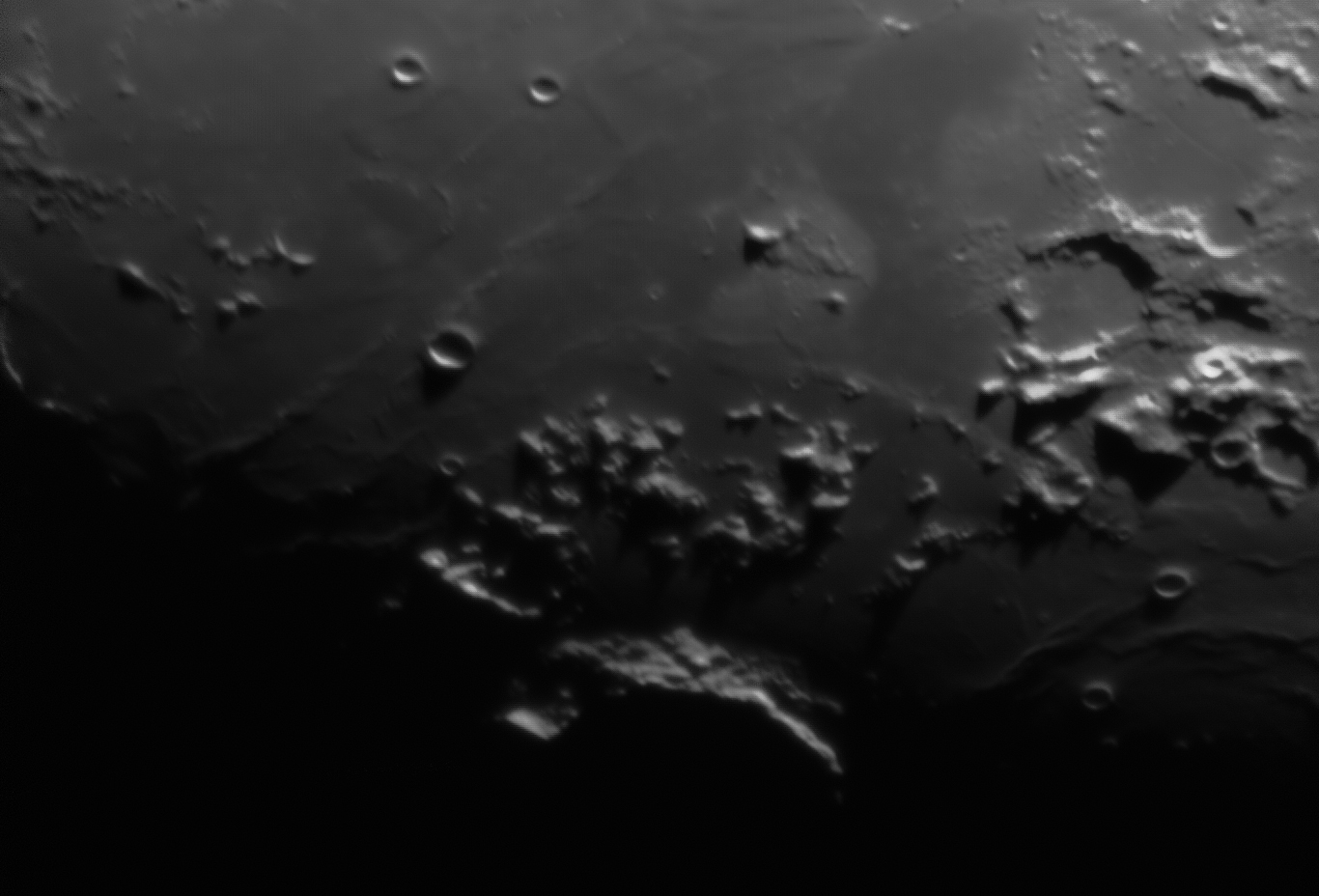
Moon 2020


First astrophotos of the year were, of course, the moon!  I really need to make an effort to shoot from some different locations.  My sky availability at home basically gives me right around the first quarter to full moon which is great, but I miss out on a lot of interesting features that are only captured during earlier phases.  Until I make that effort, these will have to do!


Photo Details
January 8, 2020
AstroTech 65Q on VX Mount
NexImage10 Camera
Image Acquisition iCap2.4
Y800 Codec
Image Stacking in AutoStakkert
Wavelet Filtering in Registax
Final Adjustments in Photoshop

Wednesday, December 18, 2019

December Moon


Nothing beats a crisp moon glowing over a cold winter's night.  These were shot a few weeks ago when the moon was just past First Quarter.  

Photo Details
December 4, 2019
Orion 8" Astrograph on VX Mount
NexImage10 Camera
Image Acquisition iCap2.4
Y800 Codec
Image Stacking in AutoStakkert
Wavelet Filtering in Registax
Final Adjustments in Photoshop

Sunday, September 1, 2019

Messier 16 (War) Eagle Nebula and the Coat Hanger

Messier 16 (War) Eagle Nebula

Coat Hanger Asterism

Friday night brought clear skies and (reasonably) dry air and it was the perfect time to get out for some deep sky imaging.  The first target was Messier 16, otherwise known as the Eagle Nebula.  I added the (War) in honor of the first victory of the year for the Auburn Tigers.  I've imaged M16 a few times and this one may be the best one yet.  The "elephant trunks" in the middle were imaged by the Hubble Space Telescope and became one of the most famous images of all time and are known as the Pillars of Creation, an active star forming area.

The second image is known as the Coat Hanger asterism for obvious reasons.  I wasn't able to fit all the stars in the image; there's a few more off to the right.  Still, it's a striking collection known especially for it's shape and the sharp contrasting colors between the starts.


Photo Details - Messier 16
August 30, 2019
Orion 8" Astrograph on VX Mount
SBIG STF-8300C Camera
Baader MPC Mark III Multi-Purpose Coma Corrector
Skyglow filter
9 subframes at 3 minutes/frame
Total Exposure Time = 27 minutes
Image Acquisition in CCDOps
Image Stacking in Deep Sky Tracker
Image Processing in PhotoShop

Photo Details - Coat Hanger
August 30, 2019
Orion 8" Astrograph on VX Mount
SBIG STF-8300C Camera
Baader MPC Mark III Multi-Purpose Coma Corrector
Skyglow filter
19 subframes at 3 minutes/frame

Total Exposure Time = 57 minutes
Image Acquisition in CCDOps
Image Stacking in Deep Sky Tracker
Image Processing in PhotoShop

Saturday, July 27, 2019

Jupiter & Saturn


A week of beautiful weather encouraged me to get back out and image some planets.  Saturn is busy chasing Jupiter across the sky at sundown and neither disappointed on the two clear nights we had this week.  You might notice the small spheres at about 7 o'clock on Jupiter.  That's the moon Ganymede just finishing it's transit of the surface.  

Photo Details - Jupiter
July 24, 2019
Orion 8" Astrograph on VX Mount
NexImage10 Camera
Image Acquisition iCap2.4
Y800 Codec
Image Stacking in AutoStakkert
Wavelet Filtering in Registax
Final Adjustments in Photoshop

Photo Details - Saturn
July 26, 2019
Orion 8" Astrograph on VX Mount
NexImage10 Camera
Image Acquisition iCap2.4

Y800 Codec
Image Stacking in AutoStakkert
Wavelet Filtering in Registax
Final Adjustments in Photoshop

Saturday, July 13, 2019

Weather & Nightscapes


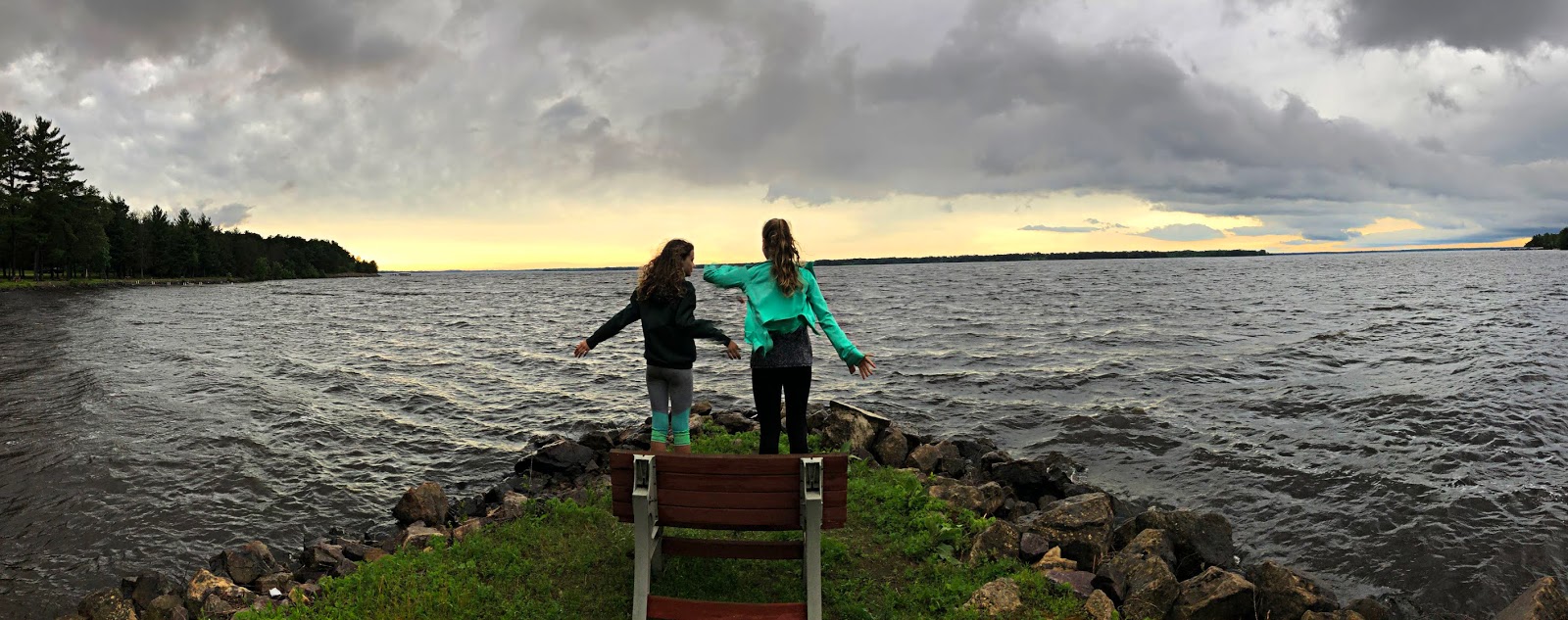
And so begins my new interest in photographing weather and nightscapes.  We had a week of gorgeous skies in Wisconsin at Castle Rock Lake followed by a beautiful night here in the south.  This kind of photography poses its own unique challenges, but sure is fun!   

Photo Details
First 8 photos above taken at Castle Rock Lake with and iPhone.
Postprocessing in Photoshop

Bottom Photo
Nikon D3100
Postprocessing in Photoshop

Saturday, June 22, 2019

More Moon


Just over a week ago we had a remarkably clear and cool night, or what passes for clear and cool here in the South.  It had been a while since I'd been out to image anything and the Moon, as always, put on a fantastic show.

Photo Details
June 13, 2019
AstroTech 65Q on VX Mount
NexImage10 Camera
Image Acquisition iCap2.4
Y800 Codec
Image Stacking in AutoStakkert
Wavelet Filtering in Registax
Final Adjustments in Photoshop

Monday, January 21, 2019

Super Blood Wolf Moon


Eclipse Update:  I had time to go through the rest of the images and put together this short video.  The images are about 10 minutes apart until the moon is fully eclipsed.


We had a perfect night to watch the Super Blood Wolf Moon last evening.  It was eerie watching the shadow creep slowly across the moon's surface getting darker and redder with each passing moment.  We shot many images, that I'll process and post later, but this is the fully eclipsed moon at around 10:45 PM (CST).  Special thanks to Allison for helping record data throughout the duration of the eclipse.  

Photo Details
January 20, 2019
AstroTech 65Q on VX Mount
NexImage10 Camera
Image Acquisition iCap2.4
Y800 Codec @ 3872x2764
900 Frames @ 3 frames/sec
Image Stacking in AutoStakkert
Wavelet Filtering in Registax
Final Adjustments in Photoshop

Thursday, January 10, 2019

California Nebula - NGC 1499


I first visited this celestial "geographic" wonder back in 2015 and was thrilled to come back a few nights ago when the skies finally cleared and we had a deliciously cold night.  This nebula is absolutely massive.  If we could see it with the naked eye, it would span about 5 moon-widths from tip to tail and about 2 moon-widths across.  However, since it is an emission nebula (think gas cloud lit by a nearby star) the light is very diffused and difficult to observe even through a telescope.  This one takes a lot of patience and faith that you're on target.  Total exposure time for this image was 2 hours.  

Photo Details
January 6, 2019
AstroTech 65Q on VX Mount
SBIG STF-8300C Camera
Skyglow filter
40 subframes at 3 minutes/frame
Total Exposure Time = 2 Hours
Image Acquisition in CCDOps
Image Stacking in Deep Sky Tracker
Image Processing in PhotoShop

Monday, November 5, 2018

Messier 30 and 72

Messier 30

Messier 72


After a long summer without much deep sky imaging, I began again my slow march through the 110 Messier objects on Saturday evening (current total is 66).  Messier 30 and 72 are two notable globular clusters that have been hovering in the Southern sky as Mars puts on its own show.  M30 lies about 30,000 light years from us and is about 100 light years across.  It's interesting that when Charles Messier first observed M30, he was not able to observe individual stars.  Today, with modern equipment, we can clearly see countless stars, many of which are "blue stragglers."    M72 appears much smaller as seen above, but it's due to a greater distance from us (about 58,000 light years).  In fact, M72 and M30 are approximately the same size across.

Photo Details
November 3, 2018
Orion 8" Astrograph on VX Mount
SBIG STF-8300C Camera
Baader MPC Mark III Multi-Purpose Coma Corrector
Skyglow filter
M30 - 5 subframes @ 3 minutes/frame = 15 mins total exposure
M72 - 11 subframes @ 3 minutes/frame = 33 mins total exposure
Image Acquisition in CCDOps
Image Stacking in Deep Sky Tracker
Image Processing in PhotoShop

Thursday, June 7, 2018

Jupiter


I was able to journey off planet last evening and had a wonderful trip to Jupiter.  This massive planet is 2.5 times the size of all the other planets in the solar system combined.  The four moons in this photo (Io, Europa, Ganymede and Callisto) are the most famous as they were first observed by Galileo who used their motion to demonstrate orbit of heavenly bodies around objects other than Earth.  In 1633 this assertion was considered heresy by the Church and he was placed under house arrest.  No worries, though, his good name was cleared 300 years later.  In addition to the 4 major moons, there are 63 additional known moons orbiting Jupiter.  It's a huge gravity well that collects anything and everything flying through our solar system.

Photo Details
June 6, 2018
NexImage10 Camera
Image Acquisition iCap 2.3
Image Stacking in AutoStakkert! 2.6.8
Wavelet Adjustments in Registax 6.1
Final Processing in Photoshop CS6

Saturday, May 26, 2018

Lunar Landscape


These images were shot back in April and I just got around to processing them.  For a more dramatic viewing, checkout my short video at:  Lunar Landscapes


Photo Details
April 25, 2018
NexImage10 Camera
Image Acquisition iCap 2.3
Image Stacking in AutoStakkert! 2.6.8
Wavelet Adjustments in Registax 6.1
Final Processing in Photoshop CS6