Saturday, July 27, 2019

Jupiter & Saturn


A week of beautiful weather encouraged me to get back out and image some planets.  Saturn is busy chasing Jupiter across the sky at sundown and neither disappointed on the two clear nights we had this week.  You might notice the small spheres at about 7 o'clock on Jupiter.  That's the moon Ganymede just finishing it's transit of the surface.  

Photo Details - Jupiter
July 24, 2019
Orion 8" Astrograph on VX Mount
NexImage10 Camera
Image Acquisition iCap2.4
Y800 Codec
Image Stacking in AutoStakkert
Wavelet Filtering in Registax
Final Adjustments in Photoshop

Photo Details - Saturn
July 26, 2019
Orion 8" Astrograph on VX Mount
NexImage10 Camera
Image Acquisition iCap2.4

Y800 Codec
Image Stacking in AutoStakkert
Wavelet Filtering in Registax
Final Adjustments in Photoshop

Saturday, July 13, 2019

Weather & Nightscapes


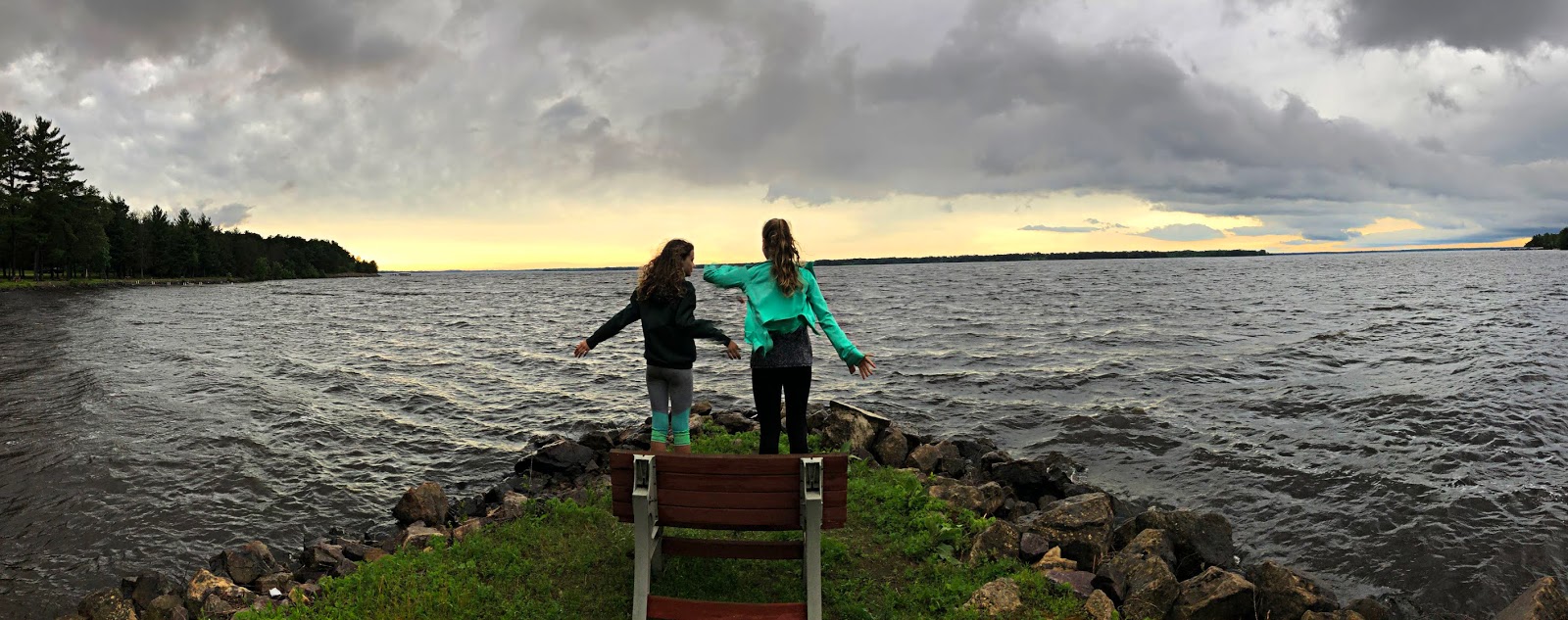
And so begins my new interest in photographing weather and nightscapes.  We had a week of gorgeous skies in Wisconsin at Castle Rock Lake followed by a beautiful night here in the south.  This kind of photography poses its own unique challenges, but sure is fun!   

Photo Details
First 8 photos above taken at Castle Rock Lake with and iPhone.
Postprocessing in Photoshop

Bottom Photo
Nikon D3100
Postprocessing in Photoshop

Saturday, June 22, 2019

More Moon


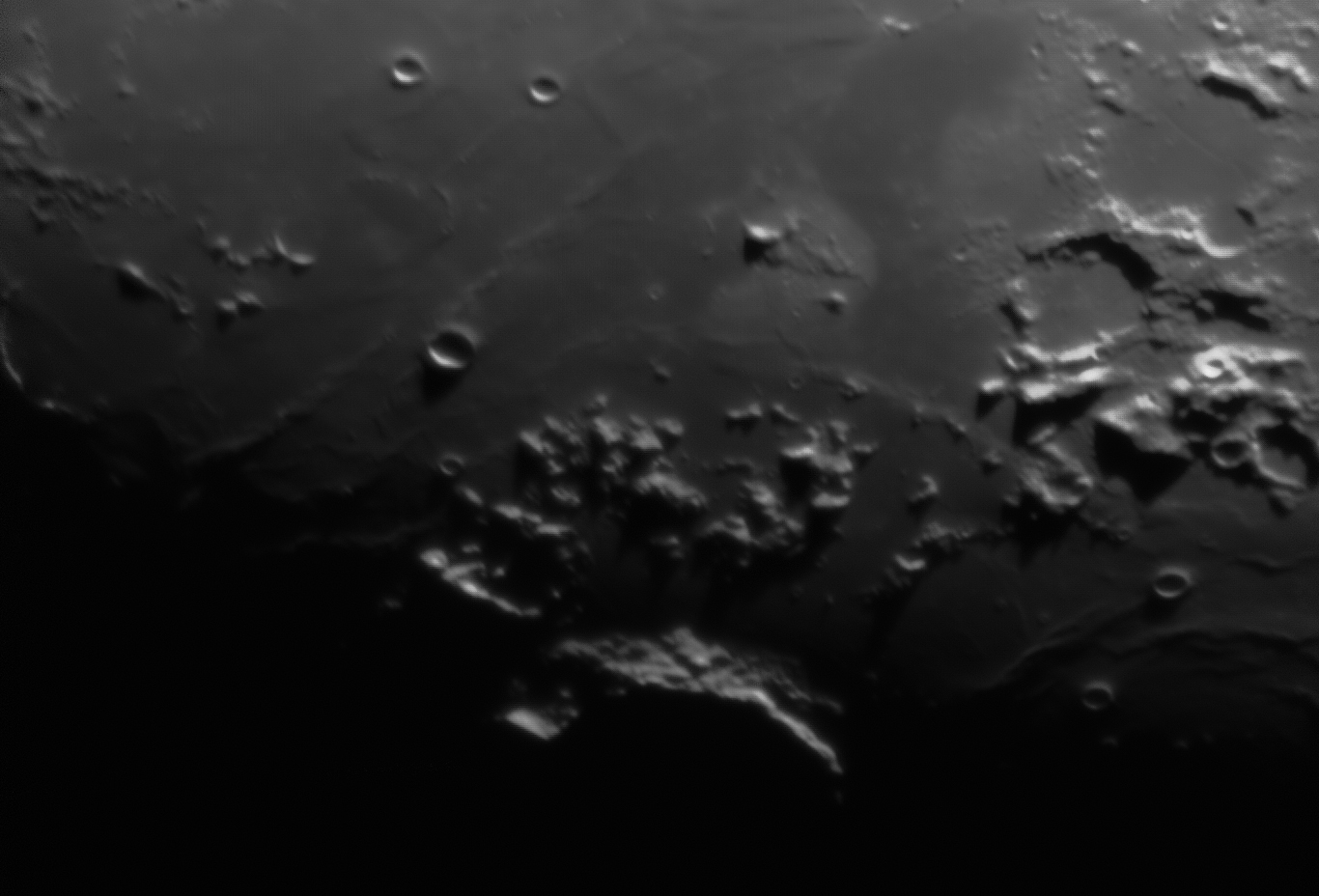
Just over a week ago we had a remarkably clear and cool night, or what passes for clear and cool here in the South.  It had been a while since I'd been out to image anything and the Moon, as always, put on a fantastic show.

Photo Details
June 13, 2019
AstroTech 65Q on VX Mount
NexImage10 Camera
Image Acquisition iCap2.4
Y800 Codec
Image Stacking in AutoStakkert
Wavelet Filtering in Registax
Final Adjustments in Photoshop

Monday, January 21, 2019

Super Blood Wolf Moon


Eclipse Update:  I had time to go through the rest of the images and put together this short video.  The images are about 10 minutes apart until the moon is fully eclipsed.


We had a perfect night to watch the Super Blood Wolf Moon last evening.  It was eerie watching the shadow creep slowly across the moon's surface getting darker and redder with each passing moment.  We shot many images, that I'll process and post later, but this is the fully eclipsed moon at around 10:45 PM (CST).  Special thanks to Allison for helping record data throughout the duration of the eclipse.  

Photo Details
January 20, 2019
AstroTech 65Q on VX Mount
NexImage10 Camera
Image Acquisition iCap2.4
Y800 Codec @ 3872x2764
900 Frames @ 3 frames/sec
Image Stacking in AutoStakkert
Wavelet Filtering in Registax
Final Adjustments in Photoshop

Thursday, January 10, 2019

California Nebula - NGC 1499


I first visited this celestial "geographic" wonder back in 2015 and was thrilled to come back a few nights ago when the skies finally cleared and we had a deliciously cold night.  This nebula is absolutely massive.  If we could see it with the naked eye, it would span about 5 moon-widths from tip to tail and about 2 moon-widths across.  However, since it is an emission nebula (think gas cloud lit by a nearby star) the light is very diffused and difficult to observe even through a telescope.  This one takes a lot of patience and faith that you're on target.  Total exposure time for this image was 2 hours.  

Photo Details
January 6, 2019
AstroTech 65Q on VX Mount
SBIG STF-8300C Camera
Skyglow filter
40 subframes at 3 minutes/frame
Total Exposure Time = 2 Hours
Image Acquisition in CCDOps
Image Stacking in Deep Sky Tracker
Image Processing in PhotoShop

Monday, November 5, 2018

Messier 30 and 72

Messier 30

Messier 72


After a long summer without much deep sky imaging, I began again my slow march through the 110 Messier objects on Saturday evening (current total is 66).  Messier 30 and 72 are two notable globular clusters that have been hovering in the Southern sky as Mars puts on its own show.  M30 lies about 30,000 light years from us and is about 100 light years across.  It's interesting that when Charles Messier first observed M30, he was not able to observe individual stars.  Today, with modern equipment, we can clearly see countless stars, many of which are "blue stragglers."    M72 appears much smaller as seen above, but it's due to a greater distance from us (about 58,000 light years).  In fact, M72 and M30 are approximately the same size across.

Photo Details
November 3, 2018
Orion 8" Astrograph on VX Mount
SBIG STF-8300C Camera
Baader MPC Mark III Multi-Purpose Coma Corrector
Skyglow filter
M30 - 5 subframes @ 3 minutes/frame = 15 mins total exposure
M72 - 11 subframes @ 3 minutes/frame = 33 mins total exposure
Image Acquisition in CCDOps
Image Stacking in Deep Sky Tracker
Image Processing in PhotoShop

Thursday, June 7, 2018

Jupiter


I was able to journey off planet last evening and had a wonderful trip to Jupiter.  This massive planet is 2.5 times the size of all the other planets in the solar system combined.  The four moons in this photo (Io, Europa, Ganymede and Callisto) are the most famous as they were first observed by Galileo who used their motion to demonstrate orbit of heavenly bodies around objects other than Earth.  In 1633 this assertion was considered heresy by the Church and he was placed under house arrest.  No worries, though, his good name was cleared 300 years later.  In addition to the 4 major moons, there are 63 additional known moons orbiting Jupiter.  It's a huge gravity well that collects anything and everything flying through our solar system.

Photo Details
June 6, 2018
NexImage10 Camera
Image Acquisition iCap 2.3
Image Stacking in AutoStakkert! 2.6.8
Wavelet Adjustments in Registax 6.1
Final Processing in Photoshop CS6

Saturday, May 26, 2018

Lunar Landscape


These images were shot back in April and I just got around to processing them.  For a more dramatic viewing, checkout my short video at:  Lunar Landscapes


Photo Details
April 25, 2018
NexImage10 Camera
Image Acquisition iCap 2.3
Image Stacking in AutoStakkert! 2.6.8
Wavelet Adjustments in Registax 6.1
Final Processing in Photoshop CS6

Monday, April 30, 2018

Lowell Observatory


I'm continuing to live vicariously through my friend Brian's adventures out west.  This latest round of pictures comes from the Lowell Observatory in Flagstaff, Arizona.  This observatory has some impressive achievements that include: discovery of Pluto, moon mapping for the Apollo program and observing the rings of Uranus, to name a few.  The telescope in these pictures is the Clark Refractor which just completed a 20-month restoration.  This telescope was commissioned in 1895 as a state-of-the-art 24 inch refracting telescope.  It's been in regular use ever since and was first used for scientific research and now is open for public viewing.  It is a beast!

Wednesday, April 18, 2018

Sunset, Moon, Venus and a Telescope


I've always wanted to travel out west with a telescope to take in the crystal clear skies.  Right now, I'm living vicariously through my good friend, Brian Waller, who is on a western states road trip and is currently in Arizona.  He captured this beautiful image just after sunset last night as the Moon and Venus began to take over the night sky.  He reported a great night of stargazing with several shooting stars and countless satellites with some passing through the view of his telescope.  I may have to hop on a plane and get out there!

Photo Details
Astrophotography by Brian Waller
April 18, 2018
Scott's Reservoir Campground
Sitgreaves National Forest
Pinetop, AZ
Impage caputured with iPhone 6S

Monday, January 29, 2018

First Moon Shot


Our good friend Presleigh, who will forevermore be known on this blog under the pseudonym Sun's Eye, captured her first moon photo.  This fantastic shot was taken through her own telescope with an iPhone.  With such a great start in astrophotography, I can't wait to see what Sun's Eye captures next.  The sky's the limit!


Saturday, January 27, 2018

First Quarter Moon


It's always striking to me how dramatically different the moon appears depending on the phase.  Last week's first quarter moon provides a beautiful example where the rugged lunar terrain is clearly visible as long shadows were cast from peaks into valleys and rims into craters.  

Photo Details
January 25, 2018
NexImage10 Camera
Image Acquisition iCap 2.3
Image Stacking in AutoStakkert! 2.6.8
Wavelet Adjustments in Registax 6.1
Final Processing in Photoshop CS6

Saturday, January 6, 2018

Messier 45 - the Pleiades

Nothing in the night sky says winter to me quite like the Pleiades.  This naked-eye cluster has been interwoven with numerous cultures for centuries.  Commonly known as the Seven Sisters from Greek mythology, they are also know as the Nā hiku o Makali‘i  (Seven Little Eyes) from the Hawaiian tradition.  The gossamer-like nebulosity lit up by the stars are not part of the cluster itself, but rather a cloud of dust lying somewhere between us and the seven.  This was also one of the first images I attempted back in 2013 when I was first getting started.  I've reposted that image below for comparison.  Lots of reading, some equipment upgrades and more patience seems to have been beneficial :)  

Photo Details
January 6, 2018
AstroTech 65Q on VX Mount
SBIG STF-8300C Camera
Skyglow filter
42 subframes at 3 minutes/frame
Total Exposure Time = 2 hours 6 minutes
Image Acquisition in CCDOps
Image Stacking in Deep Sky Tracker
Image Processing in PhotoShop

M45 Photographed in 2013

Tuesday, January 2, 2018

Super Moon Part II


Another perfectly clear night to start 2018!  I set up again to capture the Super Moon, but this time with a shorter focal length telescope to capture the entire surface.  

Photo Details
January 1, 2018
AstroTech 65Q on VX Mount
NexImage10 Camera
Image Acquisition iCap2.3
Y800 Codec @ 3872x2764
900 Frames @ 3 frames/sec